Starting with Ukulele, Choosing Guitar
I actually started on the ukulele back in elementary school. But in high school, I decided I wanted to learn guitar — on my own.
I didn't have a deep or noble reason. I just thought Bruno Mars was really cool when he played guitar. I remember watching him and thinking, damn… I'm doing that too.
I didn't come from a poor family. My parents just didn't think learning guitar was useful. To them, it was just a hobby — something that wouldn't really lead anywhere. But the stubborn kid I was couldn't take no for an answer.
So I saved up.
For over half a year, I spent my allowance on nothing but transportation. No snacks. No extras. Just fares. Eventually, I scraped together 2,500 pesos, barely enough to buy a low-quality laminated guitar.
This was back in 2016. I was barely 13 years old. I had no credit card, and local online music stores basically didn't exist yet. We were lucky to live in Cebu province, though — if you were willing to sit through a long bus ride, you could still find real music shops.
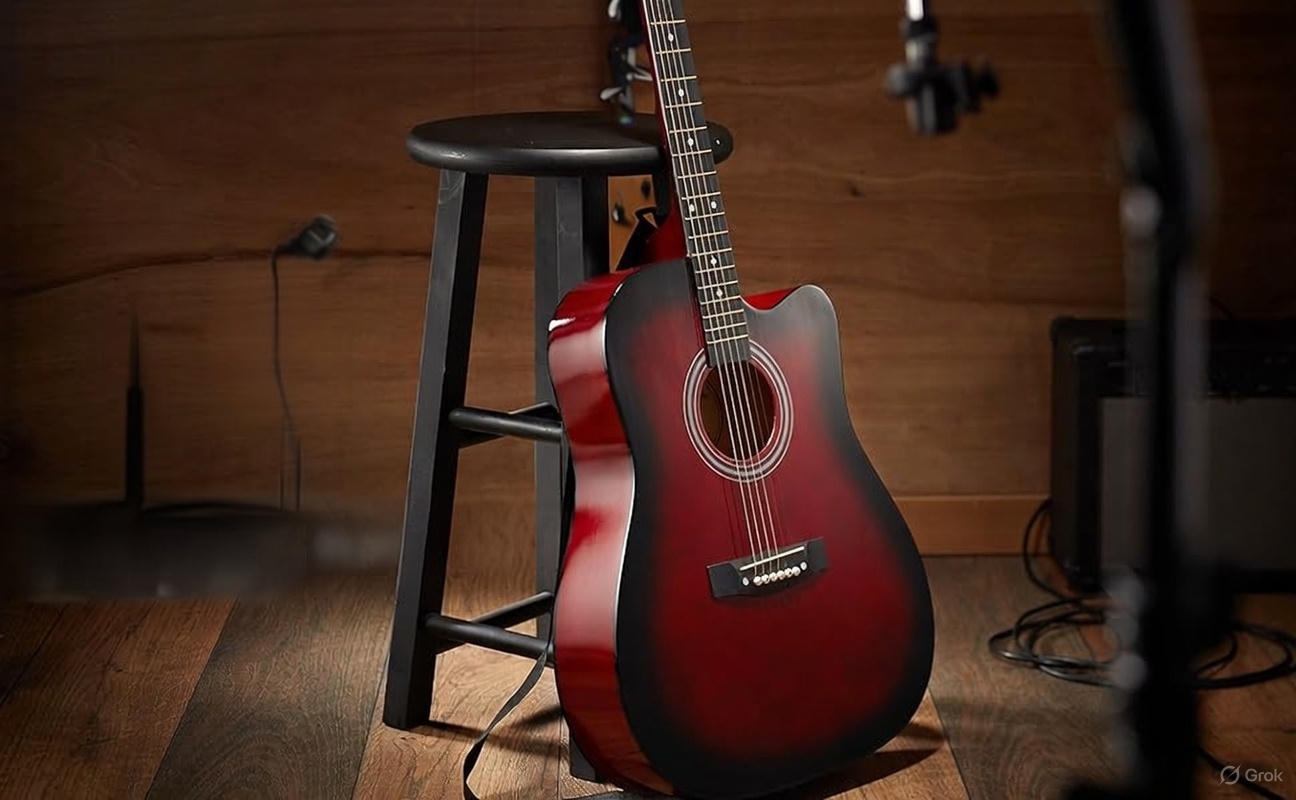
That's how I got my first guitar: a laminated acoustic, painted dark red, with a cutaway.
It looked cool.
It sounded… acceptable.
But the fretboard height at the 12th fret was ridiculously high.
I complained to my father that the guitar felt awful to play. He just said:
"But that's just a regular guitar."
Naive as I was, I believed him.
Learning Guitar Without Music Theory
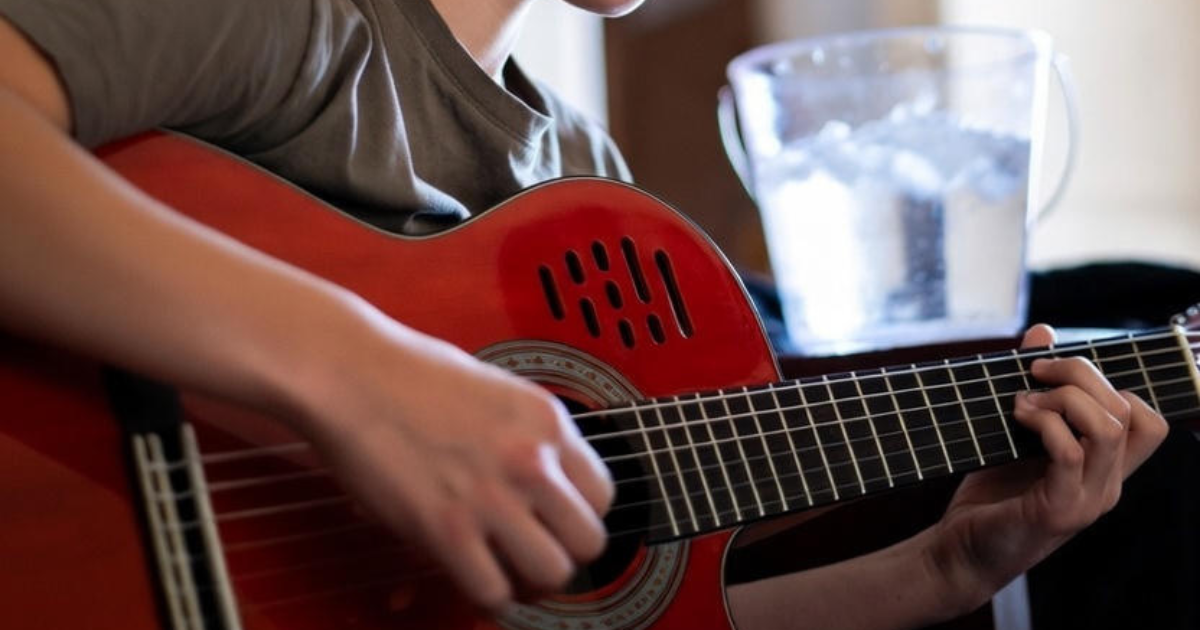
Back then, AI wasn't a thing. YouTube, however, was overflowing with guitar tutorials for popular songs. I jumped straight in.
I learned basic chords, followed strumming patterns, copied finger placements, and memorized shapes. I could play songs — but I had no idea why anything worked.
- I didn't know why some songs needed a capo
- I didn't know what key a song was in
- I didn't know what made a chord major or minor
I was just vibing. And I loved it.
I practiced around five hours a day, even on weekdays. I played until my fingers went numb, my arms cramped, and my wrists burned. When the pain became unbearable, I dunked my arms in ice water and kept going.
Looking back nearly a decade later, I realize how dangerous that was. I didn't know anything about proper technique, rest, or injury prevention. But no one stopped me — and I didn't want to stop myself.
I was driven entirely by self-motivation and stubbornness.
Music Gave Me Visibility
A few years later, things started to shift.
By then, I had become a "decent" guitar player in school. Just bringing my guitar with me made people talk to me. Suddenly, I wasn't invisible anymore.
I was an awkward kid in an awkward phase of life, and music gave me something powerful: a sense that I mattered.
When Copying Chords Wasn't Enough

When I turned 15, I hit a wall.
I discovered a niche genre I absolutely loved — certain anime songs that weren't mainstream at all. The problem? There were no chords online. No tabs. No tutorials. For the first time, copying wasn't an option.
I really loved those songs, and I didn't want the lack of resources to stop me from playing them. I had no budget for a teacher, so I made a decision that would quietly change everything: I would learn music theory on my own.
At that point, I already knew a lot of fingerstyle arrangements. I had a rough idea that thicker strings handled bass notes and thinner strings handled melody. I could hear when something sounded right or wrong — but I couldn't explain why.
I started with diagrams. Formulas. Major and minor chords. Intervals. At first, theory felt like math invading something emotional. But slowly, things clicked.
- Chords weren't magic shapes — I could build them
- Keys weren't arbitrary — I could predict what would work
- Capos weren't cheats — they were tools
For the first time, I wasn't just memorizing music. I was understanding it.
The Jamming Problem No One Talks About
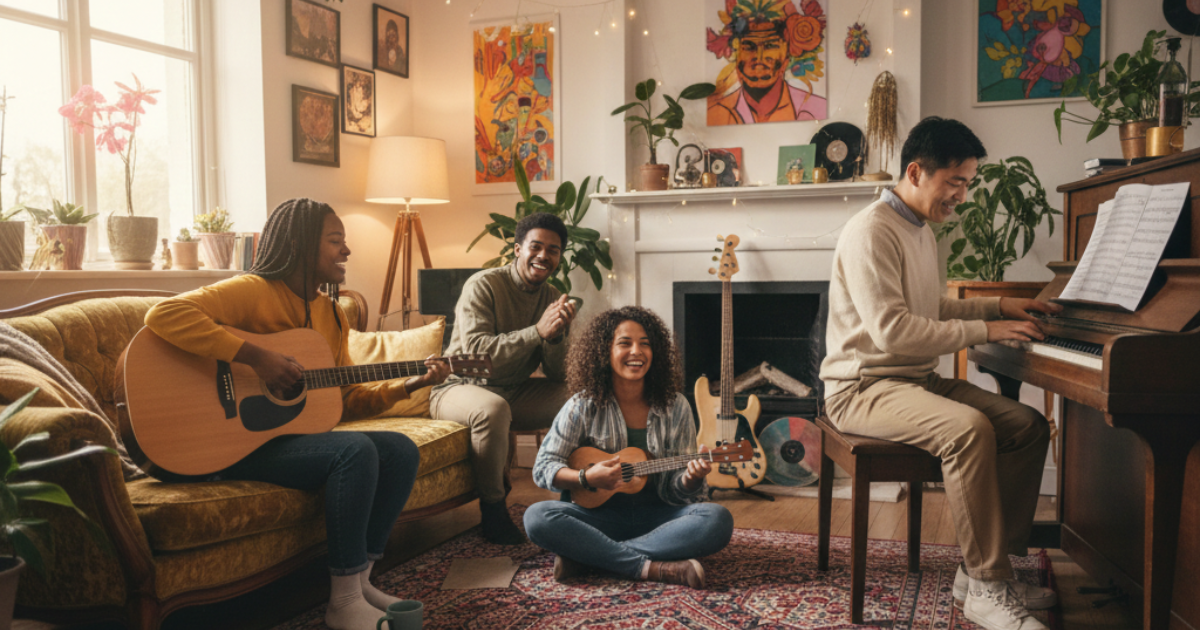
Even with music theory, jamming can still be frustrating.
One time, I went to someone's house to jam with a pianist. The only instruments lying around were a guitar and a ukulele — and there was only one capo.
He played the chords exactly as written. I mentally transposed every single chord in real time. It was exhausting — and it completely broke the flow of the jam.
And this wasn't a one-off experience. I kept running into situations where:
- someone needed to change the key on the spot
- a capo was required, but only one was available
- a song was too high or too low for the singer
- jam sessions were delayed just to transpose chords
I remember thinking: why is this still so clunky?
Quick tip
If you've ever been stuck in this spot, try transposing chords instantly with the free tool:
Use TransposeChord →Why I Built TransposeChord
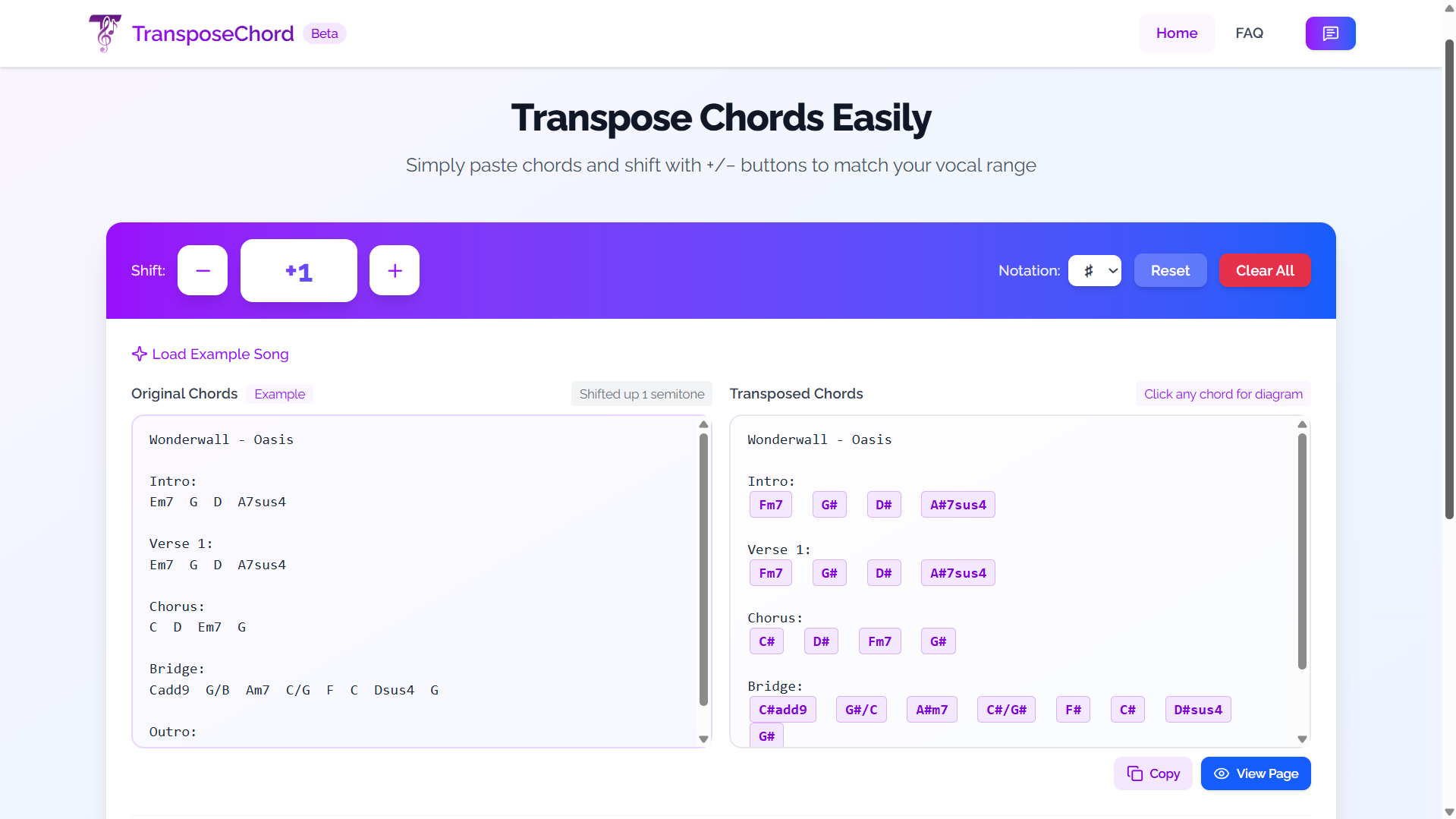
I didn't want music to pause because someone had to do mental gymnastics. I didn't want jams to stall because we had to "figure things out first."
I wanted a simple chord transposition tool. Something where you could:
- transpose any chord sheet to match your vocal range
- instantly change keys for different instruments
- see clear, interactive chord diagrams
- keep everyone in the jam on the same page
One of my closest friends is a bassist. She's solid on guitar too — but if only a guitar was available, she'd still end up staring at guitar-only chord sheets. I wanted something that made jamming more inclusive, not more complicated.
That's why I built TransposeChord. Not to replace music theory. Not to dumb things down. But to remove friction.
Because music should flow. Jamming should feel natural — not mentally exhausting. And no one should be left out just because the chords are in the "wrong" key.
Free tool
Stop transposing chords in your head
Paste your chords. Change the key. Keep the music moving.
transposechord.com →